Wedding Day Timeline Guide for Melbourne Couples
The single question we're asked most often isn't about lenses or editing style — it's "how many hours do we actually need?" The honest answer depends on your ceremony and reception format, but there's a shape to a well-run Melbourne wedding day that holds true almost every time. Here's how to plan it.
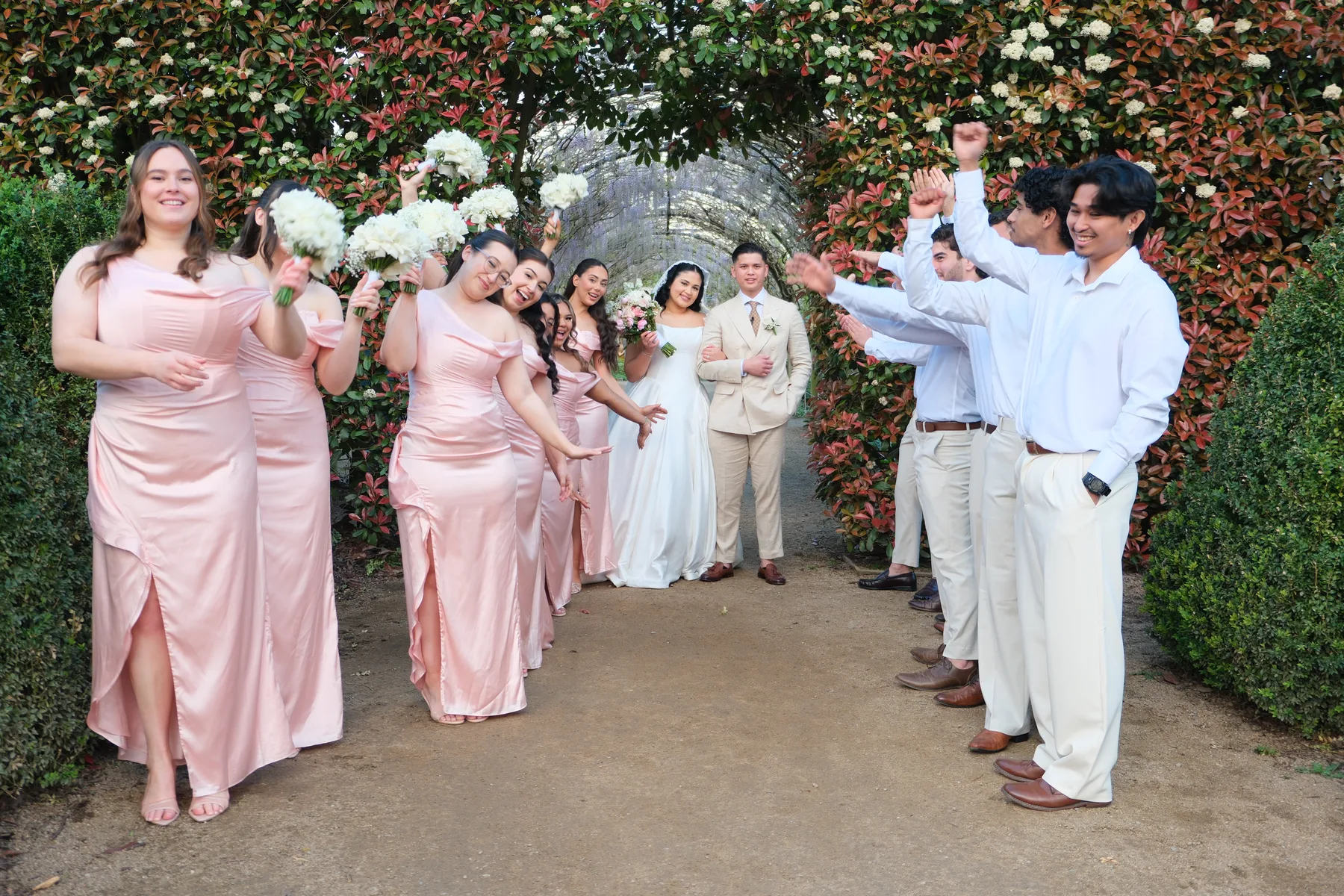
How much coverage do you actually need?
Coverage length is the first decision, because it shapes everything else on the timeline. Here's how our three most-booked package lengths tend to play out:
Suits an intimate ceremony, elopement, or a day where photography starts just before "I do." Covers ceremony, couple portraits, and family formals.
The most common choice. Covers preparation through to the start of the reception — speeches and dancing are typically not included at this length.
Covers the full arc — getting ready through speeches, first dance, and cake cutting. The right choice if you want the reception properly documented too.
A sample 8-hour Melbourne wedding timeline
Every day is different, but this is a realistic shape for a full-day wedding with a 3pm ceremony and a spring or autumn sunset around 6:45pm. Use it as a starting point, then adjust around your own ceremony time and season.
Three planning habits that make the biggest difference
Build in buffer, not just events. Add 15–20 minutes of slack between each block above. Hair and makeup running long, a delayed ceremony start, or traffic between venues is normal — a timeline with zero slack is what turns a normal delay into a rushed, stressful day.
Anchor golden hour to sunset, not the clock. Melbourne's sunset moves by more than three and a half hours across the year — from around 5:10pm in mid-June to nearly 8:45pm in early January. A 6:45pm golden hour works beautifully in autumn but would be full daylight in midsummer — check the actual sunset time for your date before locking in a timeline.
Share the timeline with your photographer before the day, not on it. The best timelines are built collaboratively, around your specific ceremony time, venue, and season — not copied from a template. It's one of the reasons every Sonder Clicks package includes a pre-wedding consultation.
Ready to plan your Melbourne wedding day?
We photograph weddings across Melbourne, the Yarra Valley, the Mornington Peninsula, and across Victoria. Browse our packages to compare coverage lengths, or get in touch and we'll help map a timeline around your specific day.
Questions Melbourne couples ask about wedding timelines
Most Melbourne couples land on 6–8 hours. 4 hours suits an intimate or elopement-style day covering ceremony and portraits only. 6 hours covers preparation through to the start of the reception. 8 hours (full day) covers everything from getting ready to speeches and the first dance.
A first look lets you complete couple and family portraits before the ceremony, freeing up cocktail hour to actually join your guests instead of disappearing for photos. It's optional — plenty of couples prefer the traditional reveal at the aisle — but worth discussing early, as it changes the shape of the whole timeline.
Roughly 45–60 minutes before sunset. In Melbourne this shifts a lot across the year — as early as 5:10pm in mid-June and as late as 8:45pm in early January — so build the timeline around the actual sunset time for your date, not a fixed clock time.
Add 15–20 minutes of padding between each major block — getting ready, travel, ceremony, portraits, reception entrance. Hair and makeup almost always runs over, and Melbourne traffic can add real time between venues. A timeline with no slack is the single biggest cause of a rushed day.
Yes — and it's worth asking about upfront. Every Sonder Clicks package includes a pre-wedding consultation where we help map your specific timeline against your venue, ceremony time, and season, so the schedule is built around your day rather than a generic template.